
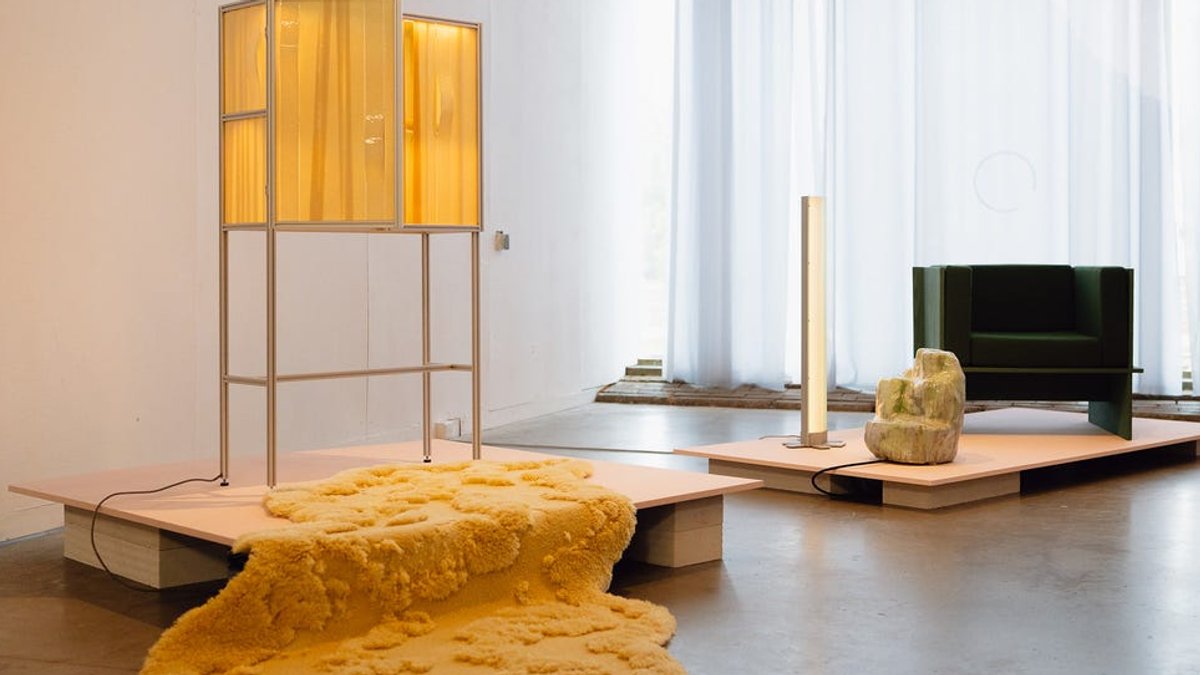
Dutch Design Week returned to Eindhoven this week for its 26th edition, and the nine-day event has once again proved its readiness to tackle global issues head on. It remains a platform where emerging and established designers can experiment, and where design is treated as a genuine tool for change. This year’s theme, ‘R.A.W. (Rebel Authentic Worth)’, celebrates work that is unpolished, exploratory and investigational, the team states. Spread across workshops, converted factories and the city’s public spaces, the festival has brought together more than 2,500 designers, studios and brands, drawing a global audience in search of new ideas.
Theme and Vision
Meis Suker, head of programme, emphasized the event’s commitment to investigative and experimental design. “At a time where design weeks, visual culture and technology strive for the polished and perfected, a lot of our programme is clearing space for the investigative and the experimental,” she stated. The festival’s focus on raw authenticity reflects a deliberate pushback against perfectionist tech culture, offering a space for risk-taking and unconventional approaches. Suker noted that this alignment with the festival’s founding ethos—rooted in emerging talent—remains central to its identity, as nurturing new talent was actually foundational to its creation.
The R.A.W. theme encouraged participants to prioritize imperfection and process over product. Suker highlighted projects like “Transparent Citizen” by app developer Mees Boeijen, who surrendered his life to AI surveillance, documenting every aspect of his daily routine through biometric and digital tracking. Visitors could follow his evolving biography, logging bank transactions, music choices, meals, browser history and even water consumption, illustrating the intrusive potential of algorithmic governance.
Notable Projects and Installations
Among the standout installations was “The Biodesign Warehouse” by biodesigner Emma van der Leest. Modeled after a department store, the project demonstrated how biomaterials can scale into everyday products, merging biology, design and technology.
Read Also: Scandinavian design adopts warmth in UK homes
Another highlight was “The Consultation Room of the Future” by Atelier Van Lieshout. Blurring the lines between art, technology and healthcare, this provocative piece considers how the healthcare sector is evolving. Taking the form of a seven-meter-tall golden bird perched on a giant egg within Markt Eindhoven, the installation invites visitors inside, where it serves as a temporary “consultation” room for pressing conversations about wellness and care.
Emerging Talent Recognition
The Dutch Design Awards Class of 2026 honored three designers for their innovative contributions. Jun Fujisaku, a Japanese designer based in Eindhoven, received acclaim for “TRANSCENDERS,” a modular system blending domestic and office functions. The jury highlighted its challenge to gender roles and cultural norms around domestic labor. Israeli designer Ori Orisun Merhav, who graduated from the Design Academy Eindhoven in 2022, was recognized for her work with insect-derived biomaterials that explore the intersection of nature, animals and technology. Dutch artist Esmay Wagemans earned praise for her fusion of sculpture and wearable objects, bridging artistic expression with functional design.
The festival also spotlighted projects like “Objects on Trial” by Bureau.parso × Meeseek, exhibited in Eindhoven’s former courthouse. This installation brings together more than 30 international designers who respond to the functions of its hall, waiting room and courtroom. Through contemporary furniture and objects in dialogue with the setting, the works explore how authority is built into furniture and form, questioning how spaces shape behavior through their structures.
Impact and Future Directions
Meis Suker noted that the response from visitors this week has been heartwarming. “People need to remain inspired and connected with others outside of their bubble, and the week is an exercise in choosing other ways of engaging with possibilities outside of our day-to-day life,” she said. Everything at Dutch Design Week, she adds, is fuelled by hope, something worth holding onto in uncertain times. “It is an immense privilege to platform this many perspectives, solutions, and dreams, as designers are finding their way into sectors where there was previously no acknowledgment of their purpose,” she concludes. Dutch Design Week runs until 25 October.


