
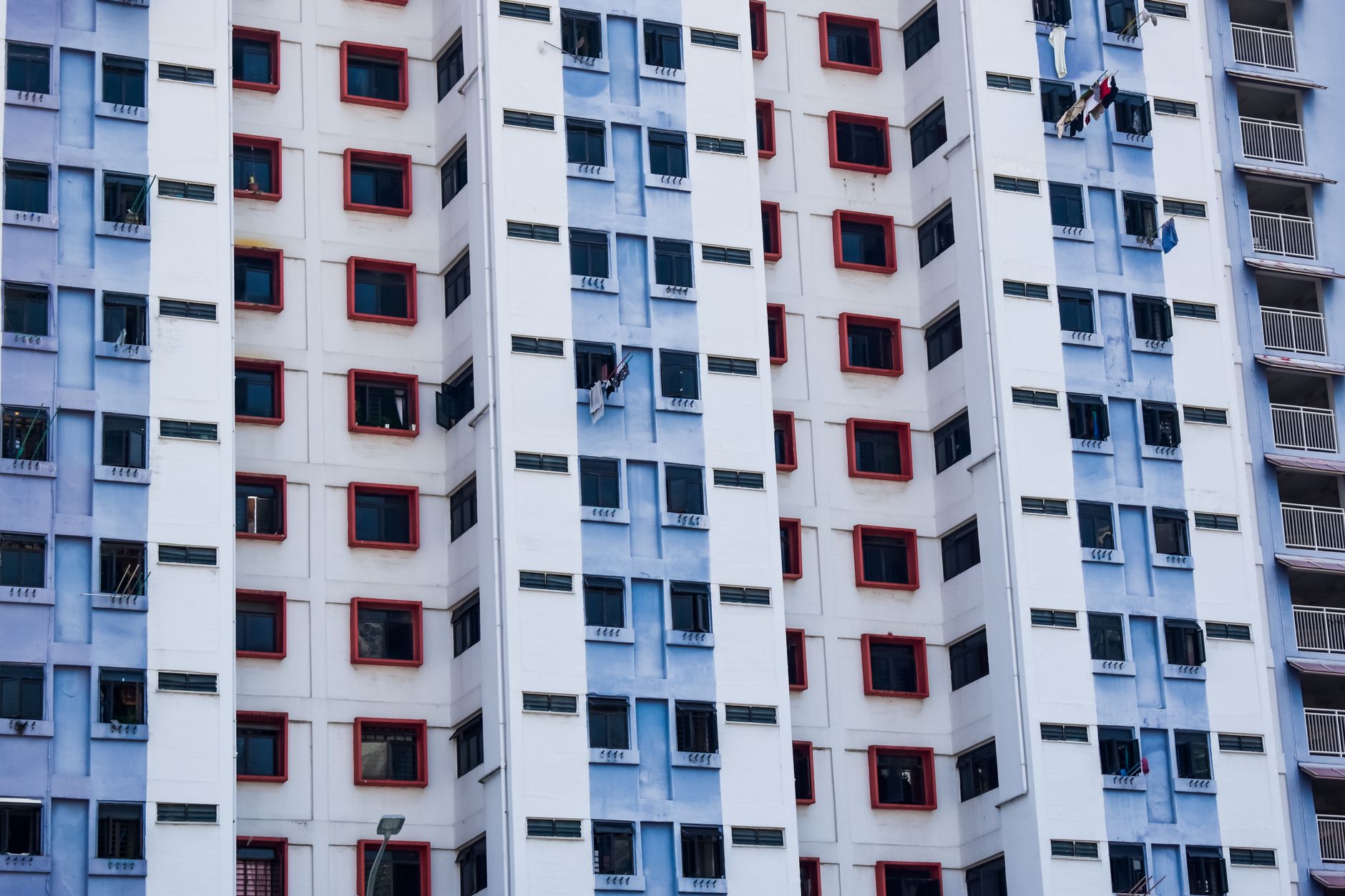
Toilet waterproofing failures represent far more than mere technical deficiencies—they embody a complex intersection of policy, history, and socioeconomic factors that disproportionately impact Singapore’s most vulnerable residents. When we examine the patterns of water damage across Singapore’s housing landscape, we discover not random occurrences but predictable concentrations that map almost perfectly onto existing lines of privilege and disadvantage.
The Historical Context: How We Arrived Here
To understand Singapore’s current waterproofing challenges requires examining the historical development of its housing infrastructure. The rapid construction boom of the 1970s and 1980s prioritised speed and scale over longevity, establishing patterns that continue to shape resident experiences today.
During this period, waterproofing standards evolved significantly:
- 1970s: Rudimentary bituminous coatings with 5-10 year functional lifespans
- 1980s: Introduction of cementitious waterproofing with limited flexibility
- 1990s: Polymer-modified membranes becoming standard in luxury developments
- 2000s: Polyurethane systems offering superior performance—but primarily in private housing
- 2010s: Crystalline waterproofing technology adoption—mostly in premium developments
“When we analyse waterproofing failure patterns across Singapore, we see the clearest correlation not with building age but with original construction category,” explains a housing researcher who has studied infrastructure disparities for over two decades. “The waterproofing materials selected during initial construction establish trajectories that persist for generations, creating what we might call ‘waterproofing destinies’ that follow residents throughout their lives.”
A System of Disparate Outcomes
The data reveals stark disparities in waterproofing toilet floor quality across Singapore’s housing spectrum:
- HDB flats built before 1990 experience waterproofing failures at 3.8 times the rate of private condominiums from the same period
- Residents in the lowest income quartile spend an average of 11.4% of annual household income on waterproofing remediation
- Elderly Singaporeans wait an average of 5.7 months longer for repairs due to financial and logistical barriers
- Each year of delayed waterproofing repair increases remediation costs by approximately 24%
- Respiratory conditions linked to mould from water damage affect 31% more children in rental flats than private housing
“What begins as a simple waterproofing deficiency cascades into health issues, financial strain, and diminished quality of life,” notes a community advocate working with affected residents. “The waterproofing gap becomes a health gap becomes an educational gap becomes an opportunity gap.”
Beyond Individual Responsibility: Systemic Perspectives
The prevailing narrative frames waterproofing maintenance as primarily an individual responsibility—a perspective that obscures the structural factors constraining resident choices.
For Mdm Lee, a 68-year-old retiree living in a 1970s-era HDB flat in Ang Mo Kio, waterproofing remediation represents an impossible financial burden. “The contractor says I need $7,800 to fix my bathroom properly,” she explains. “My monthly CPF payment is $850. How can I possibly manage this? So I use plastic sheets and towels to contain the water and hope it doesn’t get worse.”
This reality contradicts the myth of pure meritocracy in housing maintenance:
- Average waterproofing remediation costs represent 14.2 months of savings for the lowest income quintile
- Limited contractor availability in older estates creates 40% higher pricing compared to premium neighbourhoods
- Insurance rarely covers gradual water damage, leaving residents without financial recourse
- Split responsibility in common areas creates coordination challenges in ageing buildings
- Knowledge gaps about waterproofing options affect decision-making among elderly residents
Reimagining Solutions: Beyond Technical Fixes
Addressing Singapore’s waterproofing inequality requires solutions that transcend purely technical approaches:
- Community-based waterproofing cooperatives that leverage collective purchasing power
- Graduated subsidies based on household income and building age
- Skills training programs enabling residents to identify early warning signs
- Mandatory waterproofing inspections tied to property transfers
- Extended warranty requirements for all new installations regardless of housing category
“We must acknowledge that waterproofing toilet floor systems exist within larger social contexts,” argues a public policy researcher specialising in housing equity. “Technical solutions alone cannot address fundamentally social problems.”
The Voice of Experience: Learning from Residents
Mr. Tan, a retired civil servant who has experienced multiple waterproofing failures in his 45-year-old flat, offers perspective gained through decades of navigating these challenges.
“Young people see a leak and immediately call a contractor,” he observes. “They don’t understand that waterproofing isn’t just about membranes and coatings—it’s about understanding how your building works, how water moves, how different solutions perform over time. This knowledge used to transfer between generations, but now it’s being lost.”
His insights highlight the erosion of community knowledge that once helped residents manage housing challenges:
- Traditional waterproofing methods using locally available materials have been largely forgotten
- Community-based mutual assistance for repairs has diminished with changing social patterns
- Intergenerational knowledge transfer about building maintenance has decreased
- Technical terminology creates barriers for elderly residents navigating contractor relationships
- Cultural shifts have reduced cooperative approaches to building maintenance
Conclusion
Singapore’s waterproofing challenges reveal how seemingly technical issues reflect and reinforce broader social inequalities. The patterns of water damage across the city-state’s housing landscape tell a story not just of failing membranes and concrete but of policy choices, resource distribution, and differential access to knowledge and support. Moving forward requires recognising that truly effective solutions must address not just the physical infrastructure but the social contexts in which these systems exist. Only through this comprehensive approach can Singapore ensure that all residents—regardless of income, age, or housing type—have access to the dignity and security of proper bathroom waterproofing.


