
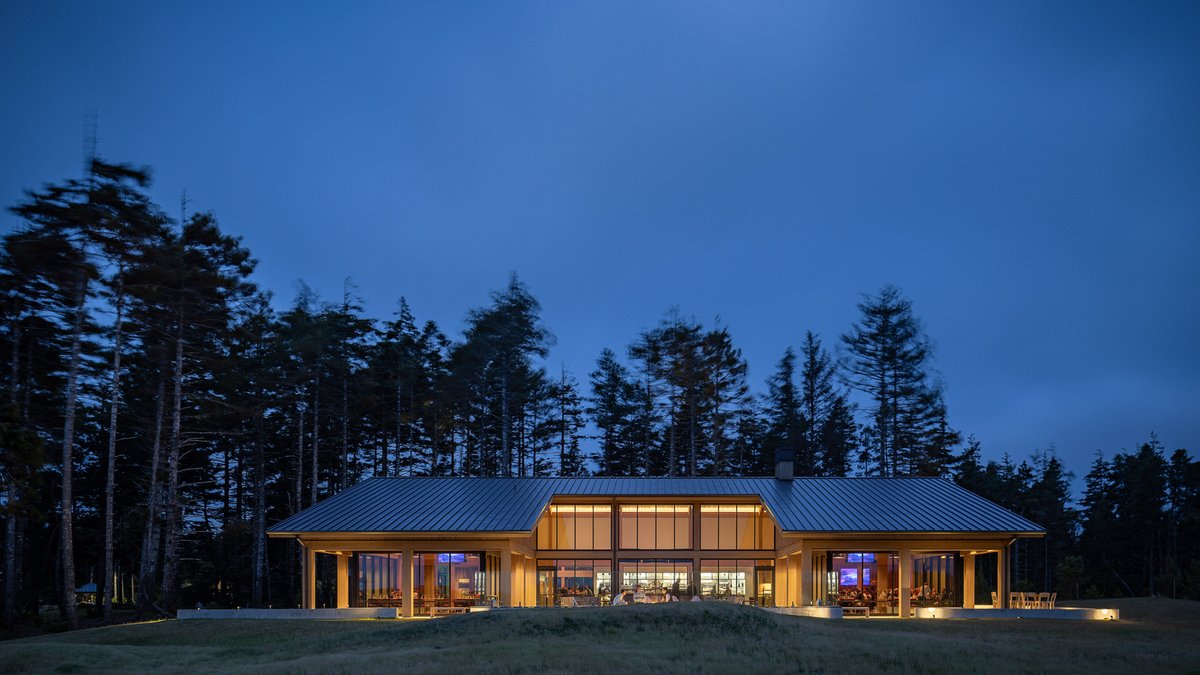
Ghost Tree Grill at Oregon’s Bandon Dunes Golf Resort has been named a finalist in this year’s GRAY Awards for hospitality design. The restaurant, created by Scott Edwards Architecture, combines contemporary architecture with the wild beauty of one of the world’s premier golf destinations.
The building stands on the Old Macdonald course, its cedar cladding that will weather elegantly with time. A sloped roof and large windows capture views of the fairways, while its hillside location near the 18th hole makes it a recognizable feature for players finishing their round.
The design creates striking contrasts between subtlety and awe
Guests pass through a simple cedar entry before stepping into a bright dining area featuring a central bar, high ceilings, and windows that stretch from floor to ceiling. The transition is intentional—quiet at first, then opening into a lively space. A live-edge wood bar serves as the focal point, with a board-formed concrete fireplace separating the bar from the main dining section.
Related: Hope Ranch Estate offers serene internal sanctuary
The restaurant branches into two glass-walled wings that feel like part of the golf course. Between them, an outdoor courtyard provides seating around a fire pit. Inside, natural materials set the tone: end-grain Douglas fir floors, leather booths in soft green and neutral shades, and industrial-style light fixtures that emphasize the height of the room. A wine library holding 1,000 bottles also functions as a service station, adding both utility and visual appeal.
The restaurant’s name comes from a dead but still-standing 50- to 60-foot Port Orford Cedar visible from the third fairway. The design pays tribute to this tree, connecting the space to the resort’s environment while offering different dining experiences. Patrons can select booths, bar seating, tables near the fireplace, or cozy corners depending on their preference.
Practical considerations also shaped the layout. Efficient zoning and ample back-of-house areas support fine-dining operations, though the open kitchen and raw bar keep the atmosphere engaging for guests.
The interior’s material palette is rooted in place
The design incorporates local textures. Cedar siding, leather upholstery, and wooden tables create a warm atmosphere, while green tile accents mirror the nearby evergreens. Custom booths, hand-tufted in muted colors, avoid the formality of traditional steakhouses, favoring a more relaxed shape instead.
Related: Elegant Satin Skirts Inspire Wedding Guest Looks
For frequent visitors, the restaurant provides options—from a casual drink at the bar to a full meal in the private dining room. The space is organized to offer different experiences, inviting guests to sit at the bar, in comfortable booths, next to the fireplace, or at tables large or intimate, depending on the occasion.
The location—a windswept stretch of Oregon coast—requires architecture that feels both confident and harmonious with its environment. Ghost Tree Grill achieves this, allowing golfers to move from the course to a meal without losing connection to the setting. The design doesn’t just occupy the site; it interacts with it, using materials and sightlines to highlight the dunes, trees, and ocean beyond.
The GRAY Awards, now in their eighth year, celebrate outstanding architecture and design in the Pacific Northwest. Finalists will learn the results later this year.


