
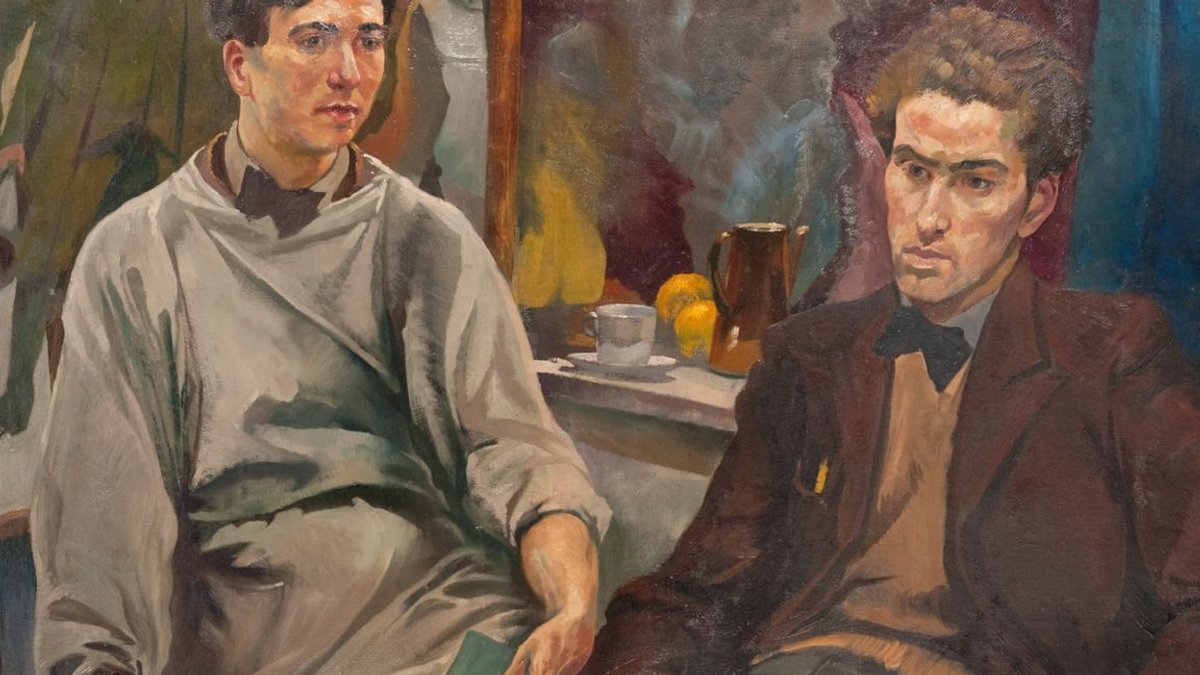
Robert MacBryde and Robert Colquhoun’s 1940s salon shone brightly but briefly, becoming a focal point for a circle of artists, writers and bohemians in post‑war London.
A lively studio at Bedford Gardens
The three painters—MacBryde, Colquhoun and John Minton—settled in a tall, red‑brick block at 77 Bedford Gardens in spring 1943. The building offered north‑facing windows that bathed canvases in steady light, a feature that attracted many painters.
Rent was £2 a week, a sum that allowed them to live and work together. Minton occupied a rear bedroom accessed through a modest kitchen, while the two Scots shared the main workroom. Colquhoun’s easel took a central spot; MacBryde kept his brightly coloured still lifes nearby.
By 1946 the pair, often called the “Two Roberts,” had eclipsed Minton in public attention. Their work was shown at Mayfair’s Lefevre Gallery and attracted buyers in London and New York. A MoMA acquisition of a MacBryde piece in 1947 confirmed their rising reputation.
Vogue sent photographer Clifford Coffin to the studio that summer. The resulting feature, titled “Tomorrow’s Names,” presented the trio as artists poised for greatness. The magazine’s pages displayed the cramped yet lively space, hinting at both camaraderie and underlying tension.
Related: Why Black Figures Endure in European Decorative Arts
Visitors such as Lucian Freud, Francis Bacon, poet George Barker and nationalist writer Hugh MacDiarmid often lingered in the studio, turning it into an informal salon where ideas and drinks flowed freely.
Fractures and decline
Despite outward success, financial strain and personality clashes began to surface. The Roberts, both from working‑class Scottish backgrounds, struggled with money, while Minton, of middle‑class English origin, relied on a modest private income.
According to contemporary accounts, MacBryde was outgoing, described by a friend as “the mobile features of a clown.” Colquhoun, by contrast, was brooding and prone to self‑doubt. Their differing temperaments created a volatile mix that both energized and destabilised the group.
The studio’s constant stream of guests made it hard for Minton to focus on his own work. He felt increasingly reduced to the role of an illustrator, a label he rejected. Tensions rose when the Roberts began to disparage him publicly.
In the autumn of 1946 Minton left Bedford Gardens, though he continued to cover shared expenses for a time. The departure removed a financial buffer for the two Scots, and by 1947 they were evicted for rent arrears. Their once‑thriving salon fragmented, and the artists faced a period of homelessness.
Related: Squat life in 90s London through Hunter’s lens
While the Roberts kept producing art, critics who had once praised them turned away. Their paintings fell out of fashion, and patronage dwindled. By the mid‑1950s they were largely ignored by the establishment that had once celebrated them.
MacBryde and Colquhoun’s personal lives also unraveled. MacBryde frequently begged former friends for money, and Colquhoun’s health declined. Lucian Freud later observed that Colquhoun’s situation was tragic and irreversible. He died of a heart attack in 1962 while drawing, with MacBryde at his side.
MacBryde’s own death came four years later in a hit‑and‑run accident in Dublin. Their untimely ends marked the final closure of a brief but intense chapter in London’s art history.
From a broader perspective, the Bedford Gardens episode illustrates how post‑war artistic communities could rise quickly on the back of shared ambition, yet remain vulnerable to economic hardship and interpersonal strain. The episode also shows how a single venue can temporarily shift the cultural map of a city, even if only for a handful of years.
Today the building still stands, its high windows filtering daylight onto the street below. No plaque or marker indicates the salon that once buzzed with the likes of Freud, Bacon and the Two Roberts, leaving the façade as the only silent witness to that fleeting moment.


