
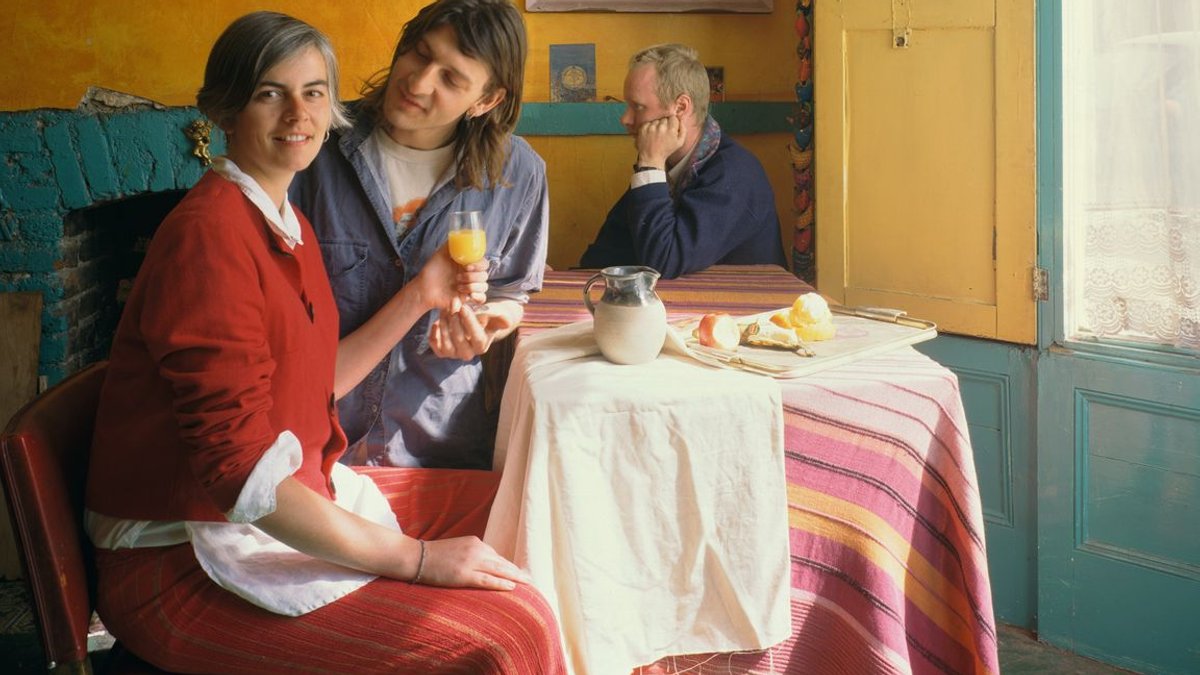
In the 1980s and 1990s, photographer Tom Hunter used his large-format camera to document London’s squats. His images, filled with deep colors and unapologetic clutter, differ sharply from the sterile white interiors common in today’s rental market.
Nearly 40% of the British public now rents, either privately or through social housing. That share includes roughly 25 million people who face restrictions on altering their homes. Private landlords often demand undamaged walls, and tenants who ignore the rules risk losing deposits or facing legal consequences. The outcome is a generation unable to personalize their living spaces.
John Milton, the Puritan poet who served under Oliver Cromwell, wrote about Adam and Eve shaping the Garden of Eden. In Paradise Lost, he depicts the first couple not only maintaining the garden but also decorating it—arranging branches and adding touches for their own enjoyment and for heavenly visitors. Cromwell’s England enforced strict austerity, yet even its followers permitted personal expression at home.
Today, that freedom belongs only to homeowners. Renters inhabit spaces that feel temporary, not just because they may move but because rules prevent any sense of permanence. The novelist Holly Pester’s The Lodgers reflects this isolation: a world so impersonal that nothing endures, not relationships, identity, or even the people themselves.
Hunter’s work presents an alternative. One photograph shows a young man lounging on a bench in a room painted bold yellow and plum. The ceiling mirrors the same colors in a checkered pattern. A paper flower hangs near the window, beside a Moulin Rouge poster and a cutout of Shere Khan from The Jungle Book. The scene is messy, personal, and unconcerned with outside opinions.
Living without the landlord in your head
Hunter’s photographs stand out because they avoid performance. The people in them aren’t posing for an audience. They don’t display status, taste, or wealth. Instead, they exist in spaces they’ve claimed as their own, without worrying about resale value or a landlord’s approval.
Related: Designer urges meaningful impact through design
Such freedom is uncommon now. Most renters live with an internalized voice that polices their actions. The fear of losing a deposit or facing eviction turns homes into blank canvases, not by choice but by necessity.
The squats Hunter documented were not ideal. Some residents were wealthy young people experimenting before inheriting money; others were activists or artists with few options. The photographs don’t glorify them. They show what happens when people shape their surroundings without fear.
That personal touch—whether a painted wall, a poster, or a room full of clashing colors—means more than decoration. It proves a relationship with space where people both take and give, turning empty buildings into homes. In doing so, they rejected the detachment that defines modern renting.
Milton’s version of the fall from Eden introduced self-awareness. Adam and Eve became conscious of being watched and needing to perform. Hunter’s images capture a brief second Eden in London’s squats before judgment took hold. The loss isn’t just about color on walls. It’s about the right to occupy a space without apology.
The exhibition Earthly Paradise: Radical Living in the UK runs at the William Morris Gallery in London through March 28.


