
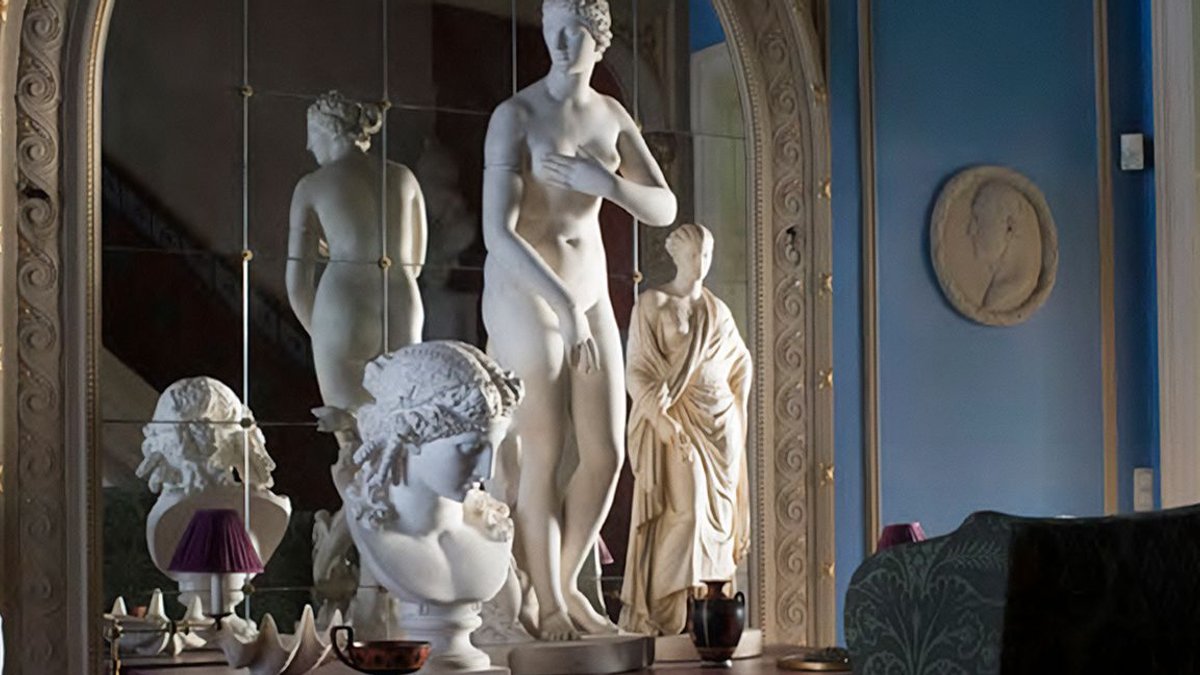
Barbara and René Stoeltie found a suitably supernatural setting for their spooky statues, discovering a Belgian residence that felt less like a home and more like a stage set for a Gothic novel.
A Haunted Beginning
On a stiflingly hot summer evening in 1979, the couple visited a writer of ghost stories, Thomas Owen, who lived in the Schaerbeek district of Brussels. Owen received them in a dimly lit library filled with books and forbidding paintings. The host, who also penned art criticism under the nom-de-plume Stéphane Rey, had recently written an article about them in Fantasmagie magazine. The real name of Owen-aka-Rey was Gérald Bertot, and his tall stature, bald head, and piercing eyes instilled a certain disquiet in them—heightened by their having lately read his bloodcurdling novel about a hunt for a vampire.
Related: Monsaraz home revamped for Paris consultant
Walking past the elegant houses with their monumental entrances and bow windows, the Stoelties knew they had no chance of settling down in one of these splendid hôtels particuliers on the Avenue Eugène Demolder—unless perhaps they devoted themselves fanatically to writing horror stories. But 30 years later in 2010, by some twist of fate, they discovered a property for rent barely 100 metres from the Owen residence.
Their first visit left them unsure which detail impressed them most: the six-foot tall, blond, blue-eyed estate agent clad entirely in black leather, or the carriage gate that led to a walled garden and through to a 12-metre stairwell and a series of rooms that had remained untouched since the dawn of the last century.
Living with the Gods
They admit that the house was too big for two people and a French bulldog, but they were drawn to the beauty of the mosaic floor in the entrance and the cast-iron balustrade of the stairs. The property offered an ocean of space for their collection of Neoclassical statues. There were enough mirrors in the house to reflect the marble busts and monumental plaster casts they had accrued over the decades, and enough gilt carvings on the panelling to reflect the soft glow of candlelight. The French often describe this specific quality as ‘je ne sais quoi’, a quality that gives a house an extra edge.
Related: Pets on show at Milan furniture fair
It is a fact that the couple has a physical and mental need for the image of the human body, and it is sculptures rather than paintings that they collect. The timeless beauty of a Greek statue, whether in marble, bronze, or plaster, is their preference. Although they have a reputation as die-hard minimalists, they would rather have several Venuses, Bacchuses, and Adonises than one. That their new home would be populated by the forms of Greek and Roman gods and goddesses came as no surprise to their friends, but that they would place an oversized plaster cast of a Classical foot in the entrance caused quite a stir.
Looking at the spoils of their ‘antique era’, they cannot deny that the presence of a considerable number of statues in a house can cause a certain unease—especially at nightfall, when an enfilade of candle-lit rooms fill with shadows that bring Juno, Hebe, and Zeus to life. Having seen André de Toth’s 1950s horror House of Wax, starring Vincent Price as a deranged sculptor, there were moments that their imagination ran wild and they could have sworn that the drawing room’s bust of Niobe had moved slightly to the right, or they suspected that they were secretly being spied on by the effigies of the ancient gods.
Related: Neo Italianate Kitchen Remodel Inspired by Barragán
Their friend, who was used to showering them with compliments, gushed that it was beautiful but also a bit creepy. She felt sure that the Stoelties would soon say goodbye to the ‘Stoeltie Museum’.
It is worth noting that this situation mirrors the historical tension between collectors and their acquisitions; history is full of wealthy patrons who amassed such vast collections that the objects eventually consumed the owners, rather than the other way around. In this case, the sheer volume of marble and plaster forced them to abandon the residence. Ten months later, they moved to a less-is-more ground-floor loft in the heart of Brussels. The gods of the Olympus were moved to a storage unit and peace descended on their life—at least for the moment. Old habits die hard, and he or she who can resist the beauty of a Greek statue has surely yet to be born.


