
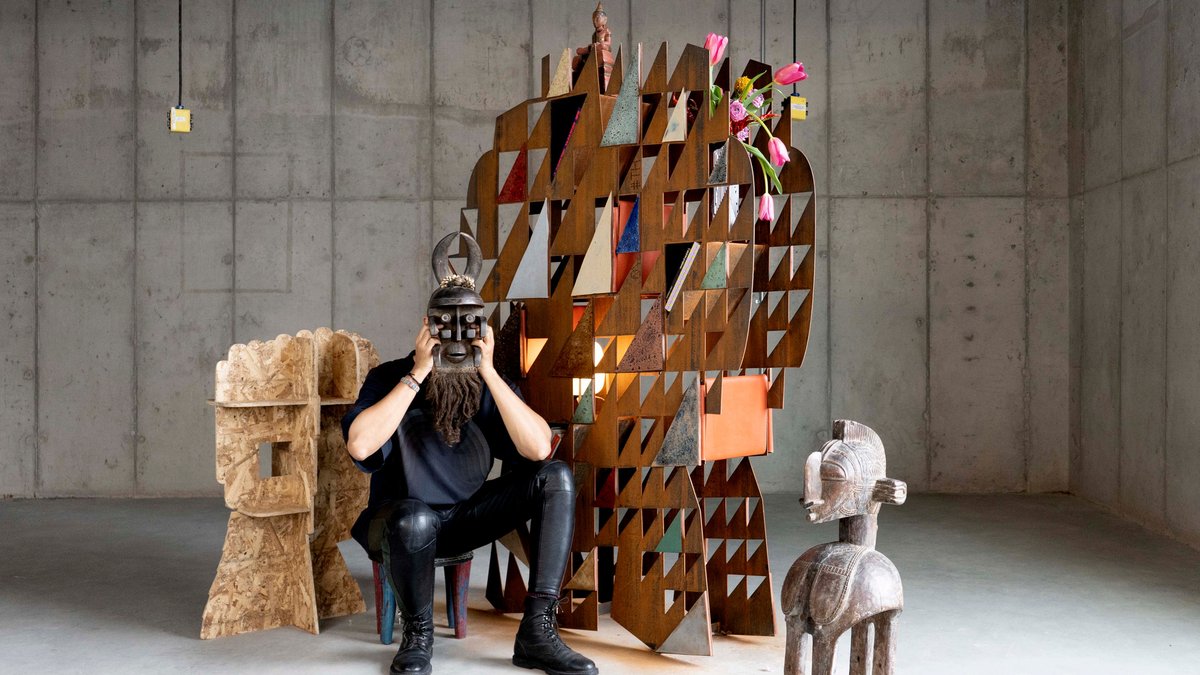
Stephen Burks has spent nearly 25 years developing a design practice centered on collaboration, craftsmanship, and cultural inclusion. His work, which includes furniture, lighting, and sculpture, merges high design with handcrafted methods. This approach took shape after a 2005 trip to South Africa, where he began working with local artisans. The experience became a cornerstone of his studio’s philosophy.
“We believe everyone is capable of design and continue to work to create more room for a pluralistic vision that includes all cultural perspectives,” Burks said. His Brooklyn-based studio, Stephen Burks Man Made, avoids rigid aesthetics, focusing instead on an open-ended set of ideas.
From Chicago to the global stage
Burks’ career began in 2000 when Italian manufacturer Cappellini produced his first designs, launching him into the international design scene. Partnerships with brands like Missoni, Dedon, Roche Bobois, and Living Divani followed, along with museum exhibitions and gallery projects. Earlier this year, the Philadelphia Museum of Art featured Stephen Burks: Shelter in Place, where he became the first African American to receive the Collab Design Excellence Award.
His achievements include being the only African American to win the Smithsonian Cooper Hewitt National Design Award in Product Design and the only industrial designer awarded the Loeb Fellowship at Harvard’s Graduate School of Design. Still, Burks emphasizes the work over accolades. “Our practice is less about a style or fixed formal vocabulary,” he said, “and more about storytelling through design.”
That storytelling often reflects his travels, personal history, and the relationship between art and culture. His 2023 sculpture Ancestors (Guardian), a six-foot-tall piece made of Corten steel, glazed stoneware, and silicone rubber, examines Black resistance and self-transcendence within the African American experience. The work serves as both a physical and conceptual monument.
Related: New Vancouver neighborhood unveiled at IDS
Design as a tool for meaning
Burks’ view of design has changed over time. “At the start of my career, it was commonly understood that form follows function,” he said. “Now, form follows meaning.” This change mirrors broader industry shifts, but Burks ties it to a practical belief: design should serve society, not just aesthetics or commerce.
His projects advance this idea. Furniture incorporating traditional craftsmanship and exhibitions challenging conventional narratives demonstrate his focus. Burks consistently explores who design serves and what it can achieve beyond expectations. The inquiry feels especially relevant in a world where technology often dictates creative boundaries.
His approach doesn’t reject innovation but seeks to balance it with human connection. Handcrafted objects, he argues, hold transformative potential in an era dominated by screens and algorithms. The contrast between analog and digital, local and global, has become a key theme in his work.
This year, Burks joined the judging panel for the 7th annual GRAY Awards. The role reflects his dedication to design that addresses real-world challenges. For him, the field’s future isn’t just about appearance but about what objects symbolize and who they’re created for.
“Design must find ways to serve society and add value to our lives in meaningful ways,” he said. The statement carries the weight of decades spent proving it can be done.


