
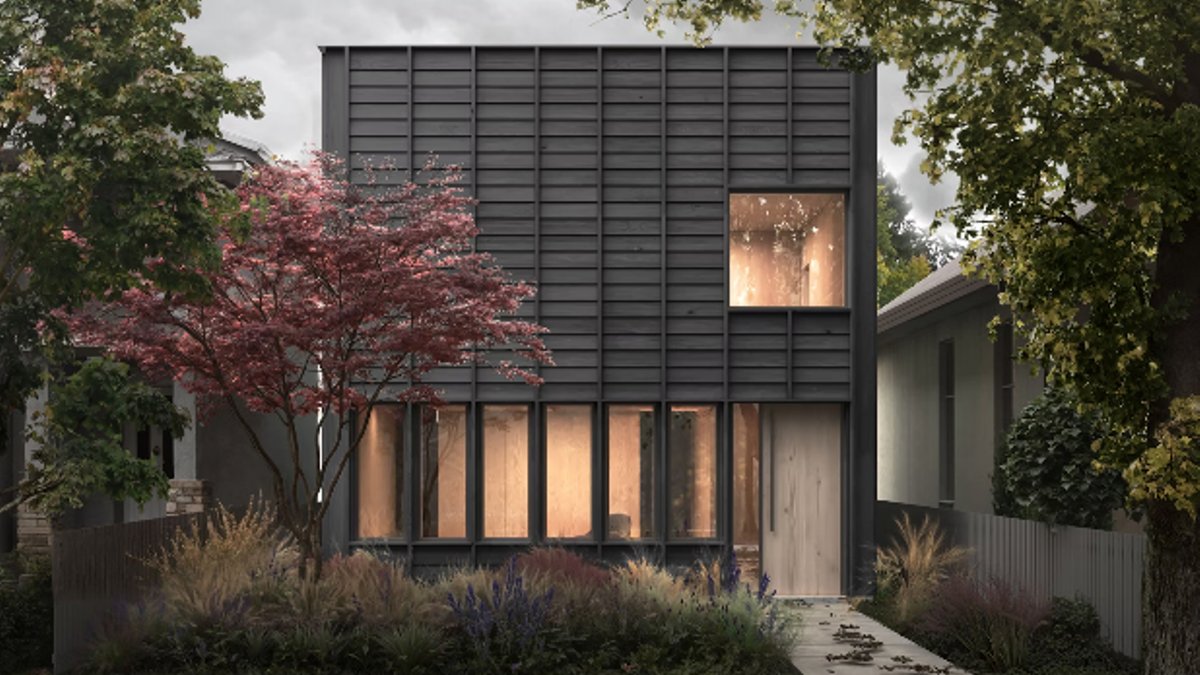
Designers are exploring how future communities can adapt to changing needs and climate realities at the Interior Design Show in Vancouver. The annual event returns this September with a feature called the “Future Neighbourhood,” showcasing four immersive installations. These projects aim to stimulate conversation about how interior design can shape and adapt to daily life.
Modular Living and Community Land Trusts
Leckie Studio presents “Addapt,” a concept based on the Japanese ‘Bento’ lunchbox. This approach suggests that homes should not be one-and-done structures. Instead, the design relies on standardized 2,400-square-foot structures that can be reconfigured. The system breaks down into three possible interior configurations within one footprint. Each 800-square-foot module is ground-oriented and can be combined into a single family home or individual dwellings. The design aims to mimic bespoke architecture without the high costs of custom construction.
The installation “Micro-Hood” by SvN proposes resilient, lower-carbon communities. The project addresses rising construction costs and labor shortages. It envisions apartment buildings on single lots to challenge conventional building norms. The team emphasizes community ownership through initiatives like Community Land Trusts.
Technology and Nature in the Home
One installation envisions a future where the forest is an integral part of interior spaces. The team behind “Don’t Forget Me” invites visitors to explore the evolving relationship between humans and artificial intelligence within design. “By helping to create these environments, AI can play a role in designing spaces that pull humans back together,” the design team states. The installation reflects an innate connection to nature, particularly the dense, forested settings of the West Coast.
Related: Architect Matthew Coates Talks AI and Inspiration
Petit Architect focuses on the next generation with “Greenville.” This activation centers on the “Future Green Neighbourhood” theme. The project invites children, youths, and families to envision what their future neighborhoods might look like. Participants contribute to a group build of a model over several days. They learn about the impact the built environment has on climate change and create drawings of their vision for future green cities.
While the concepts presented at the show offer imaginative solutions for housing and community, the feasibility of these designs in a real-world market remains uncertain. Modular systems like “Addapt” rely on highly repeatable off-site manufacturing, which requires specific market conditions and supply chains to function effectively. Similarly, projects that challenge conventional building norms or require new levels of community ownership may face significant regulatory and economic hurdles before they can be scaled.
The Interior Design Show takes place in Vancouver, British Columbia, from September 26 to 29, 2024.


