
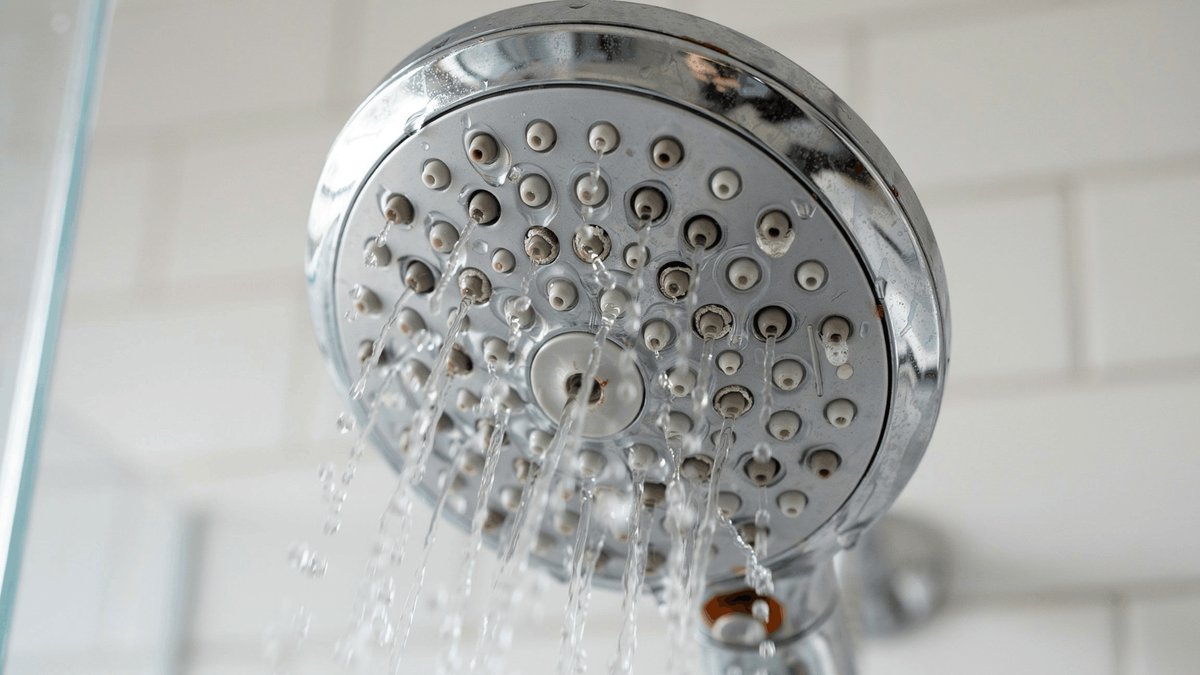
The showerhead used every morning often sprays more than water. Studies show the warm, damp interior of most showerheads harbors bacteria, some of which can cause lung infections, yet nearly no one cleans them.
The one fixture almost no one cleans
Most people scrub faucets, grout, and toilets regularly, but showerheads rarely receive the same attention. The Centers for Disease Control and Prevention (CDC) advises cleaning them whenever visible gunk appears, though few follow this guidance. A hidden layer of bacteria thrives inside as a result.
Scientists refer to this layer as a biofilm—a slimy coating where bacteria cling together, protected from chlorine in tap water. If an old showerhead is unscrewed, the inside often resembles “pipe slime,” as described by the CDC.
What’s growing inside your showerhead
A 2018 study from the University of Colorado Boulder examined 656 showerheads across the U.S. and Europe. The most frequently detected bacteria was nontuberculous mycobacteria (NTM), a group of germs capable of causing lung infections. In some homes, NTM accounted for over 99% of the bacteria inside the fixture.
Related: Easy DIY compost bin from pallets
The same team had previously discovered that one species, Mycobacterium avium, was 100 times more concentrated in showerhead buildup than in the water supply. The fixture didn’t just pass bacteria through—it accumulated them.
The CDC also identifies showerheads as a breeding ground for other harmful germs, including Legionella, which causes Legionnaires’ disease, Pseudomonas aeruginosa, linked to skin and lung infections, and Naegleria fowleri, an amoeba that can cause severe brain infections. Showering poses minimal risk for the latter.
Most of these bacteria enter the body not by swallowing water but by inhaling the fine mist created when water hits the skin. The droplets are imperceptible, yet they carry bacteria directly to the lungs.
Researchers mapped the germiest showerheads in the U.S. and found they aligned with regions where NTM lung infections were most prevalent. While healthy adults can typically resist these bacteria, the CDC notes that smokers, individuals with chronic lung conditions, and those with weakened immune systems face higher risks.
Related: Turn old jars into dried flower lanterns
The same buildup that harbors bacteria also clogs showerheads. Reduced water pressure or misdirected spray often indicates this crust.
Why buying a new showerhead doesn’t solve the problem
Many assume replacing a crusty showerhead will eliminate the issue. It doesn’t. The bacteria reside in the pipes feeding the fixture, not just the head itself. A new showerhead will begin accumulating the same gunk within weeks.
The real solution is simpler and more affordable than a trip to the hardware store.
The $2 fix that actually works
The CDC suggests soaking showerheads in white vinegar to dissolve mineral buildup. A bottle costs $1 to $3 at any grocery store, and many households already have one on hand.
Related: 6 Interior Design Trends We Will See in 2021
To clean it, fill a zip-top plastic bag halfway with vinegar and secure it around the showerhead so the spray holes are submerged. A rubber band or hair tie holds it in place. In the morning, remove the bag, dispose of the vinegar, and run the shower on hot for two minutes to flush out loosened debris.
This method isn’t permanent. Biofilm will return as long as the showerhead remains connected to the pipes. The process takes about 10 minutes. For minimal cost and effort, the fixture spraying water onto your face each morning stops being a bacterial breeding ground.
In these cases, those who cannot afford to ignore the risks may benefit the most.


