
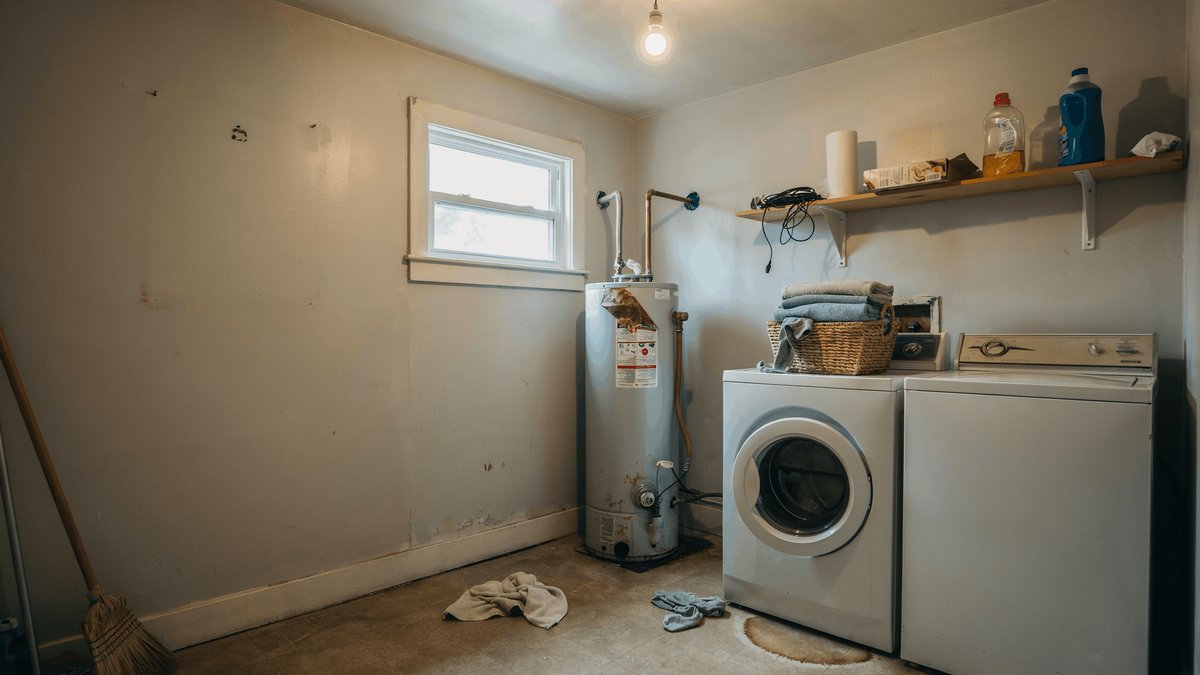
Hot water heater taking longer to heat up between showers? A simple $0 fix helps restore your supply, and ignoring it quietly raises your energy bill.
You might not notice the change day-to-day. Over time, though, the symptoms become obvious. The second or third shower of the morning comes out cooler than the first. The tank takes longer to catch up between uses. You can hear a soft popping or rumbling coming from the tank while it runs.
These aren’t random glitches. They are the same signal that something has been building inside the unit for years. Once whatever is inside takes hold, three things start happening at the same time.
Your bill goes up. The tank has to burn more gas or pull more electricity every time it runs. It is heating water through something else first. Plumbing industry sources put the extra energy cost between 10% and 30% over a tank that gets a little upkeep. On a typical household water heating bill of $400 to $600 a year, that is up to $180 a year you never agreed to pay.
Related: Shower heads harbor harmful bacteria easily cleaned
Your hot water supply shrinks. Whatever is in there takes up real space. A 50 gallon tank with a couple inches of the stuff at the bottom holds fewer gallons of hot water than it used to, which is exactly why the second shower now feels shorter than the first used to be.
The tank ages faster. Water trapped underneath gets superheated into pockets of steam. That is the popping and rumbling you hear at night. Energy Trust of Oregon says that trapped steam stresses the inside of the tank and shortens its life. The Department of Energy puts a standard water heater at 10 to 15 years. Skip the maintenance, and you can lose two to four years off that. On a $1,500 to $2,500 replacement, that is real money.
What’s actually inside the tank
Every gallon of water coming into your home leaves a little something behind. Not much. Not enough to notice on any single day. But it is constant, and it has been going on for as long as the tank has been running.
That something is mostly calcium and magnesium, the same stuff that leaves white spots on your faucets and shower doors. In cold water, they are invisible. But when the tank heats them, they fall out of the water and settle at the very bottom, right on top of your heat source. Over months, then years, they harden into a crust. Thin at first. Then thicker.
Related: Elegant Satin Skirts Inspire Wedding Guest Looks
And here is the number that should make you sit up: according to the U.S. Department of Energy, as little as a quarter inch of that crust can cut your water heater’s heating power by 25 to 40%. A quarter inch. On something you can’t see and were probably never told to check.
This buildup happens automatically. It is a natural part of running a water heater. But unlike a car where you check the oil level, most homeowners never open the valve at the bottom of the tank to see how much sediment has accumulated. The result is a gradual loss of performance that feels like the unit is simply getting old, even if it is still technically functional.
The one-step maintenance routine
Most people never learn the single most important thing you can do for a tank water heater is drain a few gallons out of the bottom once a year. Not empty the whole thing. Not call a plumber. Not buy any parts. Just open the little valve at the bottom, let a few gallons of gunky water run out through a garden hose, close the valve back up.
It costs $0. It takes about 15 minutes. Energy Trust of Oregon, along with basically every water heater manufacturer’s own guide, says to flush your tank once a year for regular water, and every six months if you live somewhere with hard water (more than 7 grains per gallon, or about 120 mg/L, common across the American Midwest, Southwest, and Texas).
Related: Summer Blooms for Sweltering Gardens
Do this once a year (twice if your water is hard). Turn off the heat first. On a gas water heater, turn the dial on the front to “Pilot.” On an electric one, flip the water heater’s switch off at your breaker box. Leave an electric heater on while it is half-empty and the heating rod inside can burn out in seconds.
Leave the cold water valve on top ON. You’re not draining the whole tank. Fresh cold water flowing in from the top helps push the gunk at the bottom toward the drain. Hook up a garden hose to the drain valve at the bottom of the tank. Run the other end to a floor drain, a basement drain, or outside. The water coming out is going to be scalding hot, so don’t aim it at a bucket in your hand.
Open the drain valve and let 3 to 10 gallons run out. The water will look brown, cloudy, or gritty at first. That is exactly what you are trying to get out. When it starts running clear, shut the valve. Turn the heat back on. Reset the gas dial, or flip the breaker back. Give it about 30 minutes to warm up before you run hot water.


