
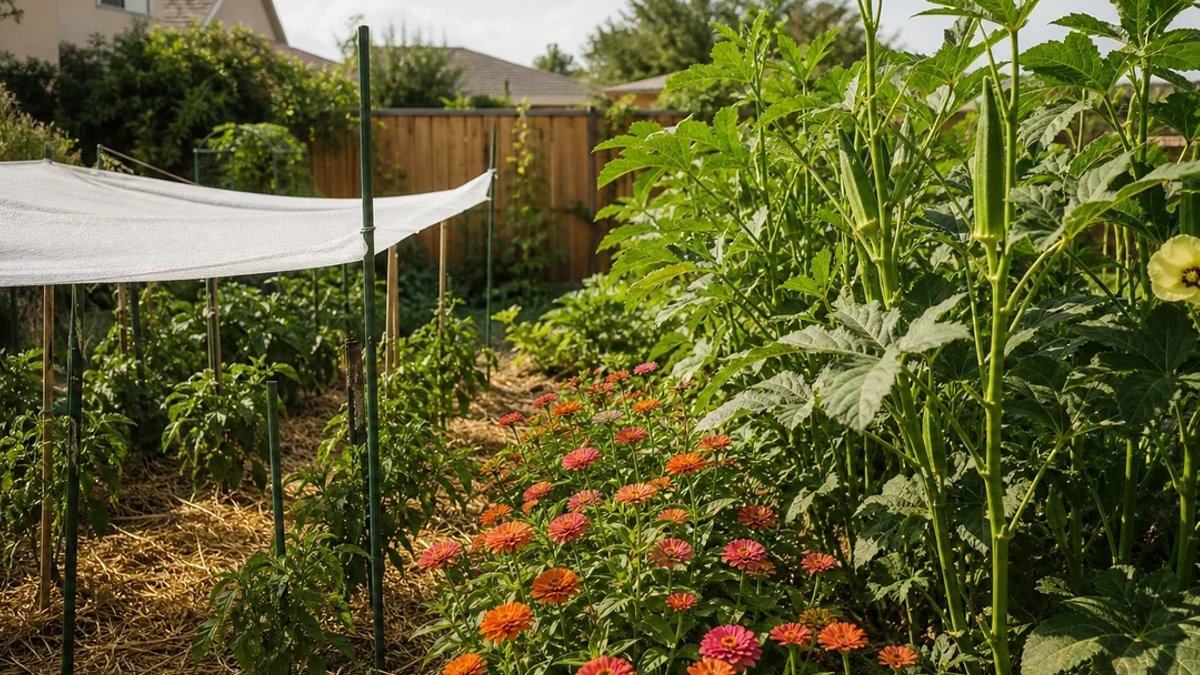
When July temperatures top 100°F across the Deep South and desert Southwest, gardeners quickly learn that survival hinges on plant choice and watering strategy.
Flowering options that thrive in triple‑digit heat
Eight heat‑proof flowering plants keep blooming when most others wilt. Zinnia performs across USDA zones 2‑11, delivering continuous color as long as spent blooms are dead‑headed. Lantana, native to tropical Americas and Africa, becomes practically drought‑tolerant once established and can act as a perennial in warm zones. Celosia thrives in full midday sun, showing orange, red and purple plumes that sharpen in heat; it is a perennial in zones 10‑11 but works as an annual elsewhere.
Portulaca (moss rose) stores water in its succulent leaves, making it ideal for hot borders or fast‑drying containers. Vinca, often called annual periwinkle, keeps flowering when petunias have collapsed, thanks to its glossy foliage and heat‑resistant blooms. Pentas offers star‑shaped clusters in red, pink and white, feeding hummingbirds and butterflies while tolerating both humid Southeast conditions and irrigated desert beds.
Vegetables and herbs that keep producing
July is also a planting window for heat‑adapted edibles. Okra is the undisputed champion of Southern heat, podding continuously in triple‑digit weather; harvest pods under three inches for tenderness. Peppers (both bell and hot varieties) continue fruiting in high heat, though bell types may drop blossoms above 90°F; a modest shade cloth in the afternoon can prevent sunscald. Eggplant also fruits well above 90°F, provided water remains consistent. Southern peas such as black‑eyed, crowder and cowpeas set pods where English peas fail, thanks to their heat‑tolerant genetics and nitrogen‑fixing ability.
Malabar spinach is a vining green that thrives where regular spinach would bolt, climbing readily on a trellis. Basil loves July heat; pinch off flower buds to prolong leaf production and maintain consistent deep watering.
Gardeners should avoid sowing cool‑season crops now; lettuce, broccoli and carrots belong in a late‑summer planting schedule for a fall harvest.
Related: Cool your yard this summer with smart fixes
Deep, infrequent watering is the cornerstone of heat resilience. Soaking the soil to a depth of six to eight inches encourages roots to grow into cooler layers, allowing plants to survive hot afternoons with less intervention.
Containers dry faster than in‑ground beds and may need a second soak on the hottest afternoons; checking soil two inches down with a finger helps gauge moisture levels.
Using a soaker hose or drip line delivers water slowly and deep, eliminating runoff. Setting the system on a timer for pre‑dawn operation ensures consistent moisture without daily manual effort.
Mulch and shade cloth provide rapid temperature relief. Applying two to four inches of coarse organic mulch—such as straw, wood chips or shredded leaves—over already‑moist soil shades the surface, cuts evaporation by 50‑70 percent and drops soil temperature 10‑20°F, according to the Farmers’ Almanac. Keep mulch a few inches away from stems to prevent rot, and avoid black plastic, which absorbs heat.
A 30 % density shade cloth offers the right balance of cooling and light for peppers, tomatoes and new transplants. Trials by the University of Delaware show that inexpensive black cloth performs as well as pricier colored versions. Suspend the cloth 18‑24 inches above plants, leaving sides open for airflow; cloth resting directly on foliage can trap heat and scorch leaves.
Heat stress and drought stress look alike, but they are distinguished by recovery patterns. If leaves wilt in the afternoon heat but perk up by sunrise, the plant is likely coping with heat stress while soil remains adequate. Persistent limpness at dawn, or dry soil an inch down, signals true drought, prompting a deep soak.
Given the current trajectory, gardeners who adopt deep watering, mulch and shade will see noticeably healthier plants through the rest of the month. However, the approach may not fully offset prolonged heat waves that push night temperatures above 80°F for weeks; in such cases, even tolerant varieties could see reduced yields.
Related: Bootcut Jeans Make Fashion Comeback
Practical steps for July garden management
Start by assessing local watering restrictions, as many Southern and Southwestern municipalities enforce odd‑even address rules during drought periods.
Water early.
Next, install a drip irrigation system if you haven’t already, and set it to deliver water early each morning.
Lay a mulch layer around existing plants, ensuring the soil is already moist to avoid blocking water absorption. Then, drape a 30 % shade cloth over vulnerable crops, securing it with stakes and leaving gaps for air movement.
Monitor plant responses daily, looking for signs of heat stress versus drought, and adjust watering depth accordingly. Avoid fertilizing during the heat peak; plants enter a semi‑dormant state and cannot utilize nutrients, and excess salts may damage roots.
By focusing on heat‑proof July plants and employing deep, early‑morning watering with mulch and shade, gardeners can keep their beds productive even when temperatures soar above 100°F.


