
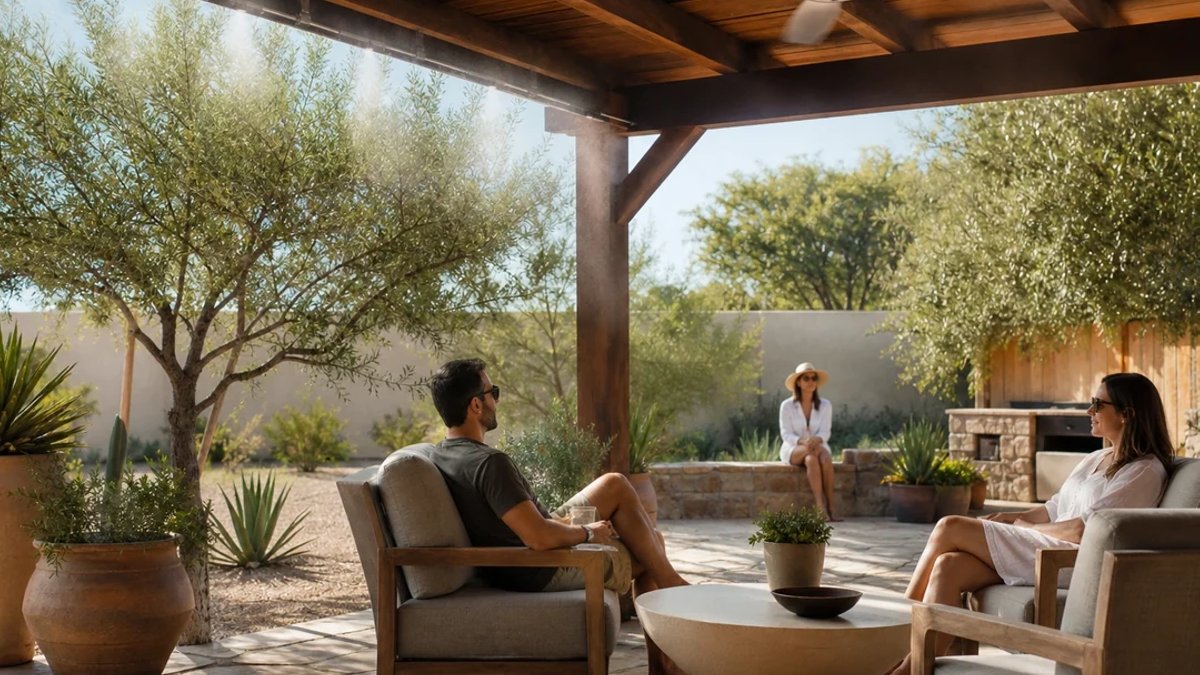
Phoenix and Houston backyards become unbearable by noon. The patio you paid for turns into a furnace from late morning to sundown, and the solution requires knowing which upgrades actually reduce heat.
Shade comes first—it makes every other upgrade work
In dry climates like Phoenix or Las Vegas, solid shade combined with a misting system can lower air temperatures. In humid areas like Houston, misters and swamp coolers prove ineffective. Shade and fans remain the only reliable options. The difference extends beyond comfort—it affects survival. Heat-related deaths rose from 1,156 in 2020 to 2,415 in 2023, according to CDC data. A shaded backyard helps avoid becoming part of that statistic on a 110°F afternoon.
The issue isn’t just air temperature. Radiant heat plays a major role. Dark pavers, concrete slabs, and masonry walls absorb sunlight all day and release it for hours. Conventional dark roofing and paved materials can sit as much as 60°F hotter than the surrounding air on a warm day, which is exactly why a concrete patio still feels like a griddle at 9 p.m.
Cooling a backyard involves two tasks: blocking sunlight from heating surfaces and then cooling the air or skin. Skipping the first step renders the second useless. A sofa in direct sunlight becomes nothing more than an uncomfortable place to sit.
Living shade outperforms hardware for long-term cooling
Planting deciduous trees or vines on the west side of a yard delivers the highest impact. That area receives the harshest late-afternoon sun. The EPA found trees and vegetation can reduce peak summer air temperatures by 2–9°F through evapotranspiration. A young olive or desert willow won’t provide immediate relief, but it offers the most affordable long-term cooling.
Most homeowners turn to hardware first. Pergolas, sail shades, and awnings all work, though not equally. A solid pergola or patio cover blocks direct sunlight before it reaches people or surfaces. Shaded areas stay 20–45°F cooler than unshaded ones, and a fixed roof prevents the patio from absorbing and releasing heat after dark. However, open-slat pergolas allow too much sunlight through, and permanent structures often require permits and HOA approval.
Related: Foxtail Grass Crafts Feature Hearts Animals Bunny Rings
Sail shades and retractable awnings cost less and can be removed. A triangular sail kit from Home Depot or Lowe’s starts at $30, while a motorized awning may cost hundreds. The fabric must be dense—thin, loosely woven sails let too much heat pass. Wind poses a risk; anchor points can tear under gusts, and retractable awnings must be pulled in before storms. For renters or tight budgets, sails provide the smartest initial solution.
Outdoor and ceiling fans don’t reduce air temperature. They circulate air across skin, speeding sweat evaporation to create a wind-chill effect. Fans cool people, not spaces. An empty patio gains no benefit. Under shade, an ENERGY STAR ceiling fan makes a space feel several degrees cooler for minimal cost. Research from the Florida Solar Energy Center found raising a thermostat by 4°F with a fan cuts cooling energy use by 10–15%.
Furniture choices matter, but only when placed in shade. Performance fabrics like solution-dyed acrylic stay cooler than dark vinyl, and powder-coated aluminum frames don’t conduct heat like bare metal. Dark cushions and stone benches become too hot to touch in direct sunlight. Retailers like Target, Walmart, and IKEA sell light-colored, synthetic sets. Without shade, even the best materials remain unusable in extreme heat.
Heat-proofing on a budget: a weekend-by-weekend plan
Upgrades don’t need to happen all at once. A staged approach works best.
Weekend one focuses on shade. Install dense sun-shade sails over the main seating area or begin the permit process for a solid cover. No other changes matter until sunlight is blocked.
Weekend two addresses air or water. In dry climates, research misting systems. In humid climates, install a covered ceiling fan—it’s the only upgrade that helps in Houston.
Weekend three improves comfort. Replace dark seating with light powder-coated frames and performance-fabric cushions. Add a recovery-zone chair, such as a suspended cocoon or egg chair, placed in the shadiest corner with a fan overhead. Retailers like Costco, Walmart, and IKEA sell these for under $200. Choose light-colored cushions to prevent heat absorption.
Related: Overview Practice of Indonesia Pharmacy
One free improvement involves ground materials. Light-colored gravel or pale pavers reflect more heat than dark concrete.
For a hot, dry Southwest yard, combine solid overhead shade with a misting system. Shade reduces radiant heat, while misting lowers air temperature. The two methods work together. For immediate relief, misting provides the fastest results. In humid Houston, skip evaporative cooling. Focus on shade and fans instead.
Shade remains the most effective upgrade. A dense sun-shade sail offers the cheapest starting point. It serves as the foundation that makes fans, misting, and furniture worthwhile.
Patio misters perform poorly in humid areas like Houston. They cool by flash-evaporating droplets, which requires dry air. In Phoenix, they can lower temperatures. In Houston, they mostly create moisture with minimal cooling. Shade and fans provide better results.
The most affordable way to make a backyard usable during a heat wave involves dense sun-shade sails and a covered outdoor fan. A sail kit costs as little as $30. Together, they block radiant heat and circulate air across skin—the two most cost-effective ways to improve comfort at midday.
For those seeking unique seating options, lightweight materials and reflective surfaces help maintain cooler temperatures in shaded areas.


