
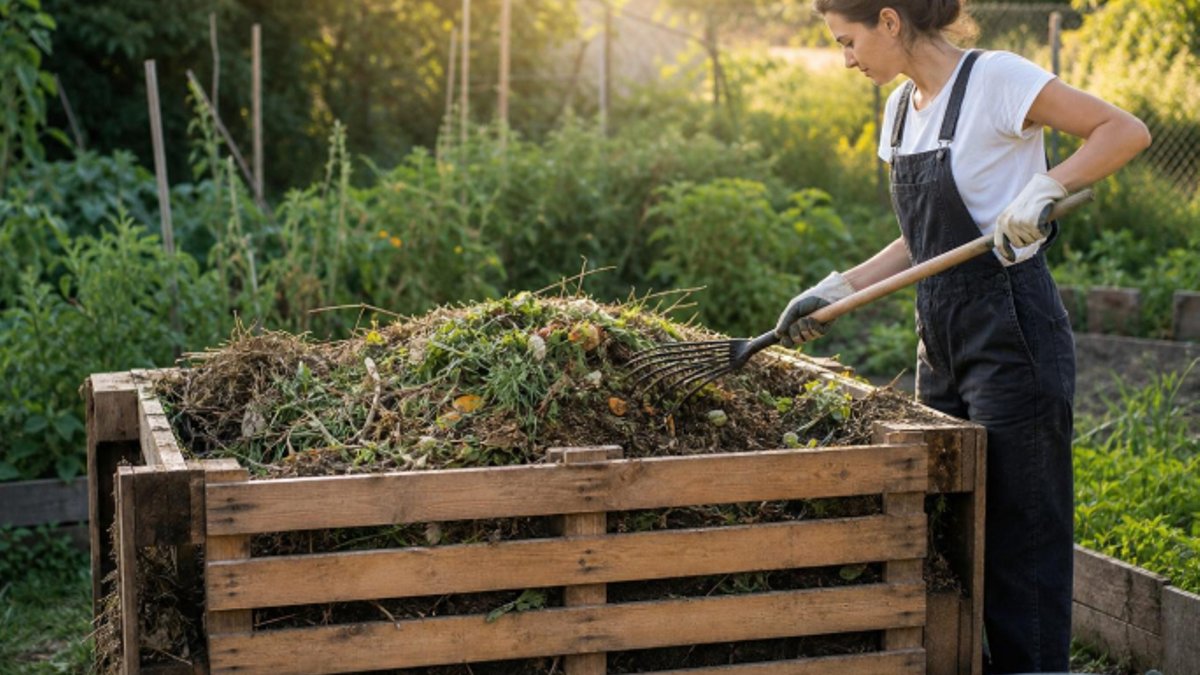
A wooden pallet compost bin converts garden waste into rich soil without expense or environmental harm. The project uses recycled materials and suits most backyards.
Before starting, choose a flat location near the garden but away from the house. The gaps between boards allow airflow, which aids bacterial breakdown, though they also permit rain to pass through. A cover helps maintain proper moisture levels.
The right mix of materials ensures effective composting. Suitable items include fruit and vegetable scraps, eggshells, coffee grounds, paper, cardboard, grass clippings, and dry leaves. Meat, bones, and pet waste should be discarded, as they attract pests and hinder decomposition. Turning the pile every few weeks accelerates the process.
Selecting safe pallets
Check for stamps indicating IPPC, EPAL, HT, or KD. These markings confirm the wood was heat-treated or kiln-dried, making it safe for reuse. Pallets labeled MB were treated with methyl bromide, a toxic pesticide, and should be avoided. Many businesses offer free pallets; local listings or warehouse dumpsters are good sources.
Related: 2026 US Garden Trends Highlight Sustainable Patio Designs
Three pallets create a basic bin, while a fourth can be cut in half to form a door. Without a door, a three-sided box works just as well. The open side simplifies waste disposal using a wheelbarrow.
Building the bin
Place the first pallet flat on the ground. Position the second at a right angle and secure it temporarily with string. Attach the two using corner brackets. Repeat with the third pallet. For a door, split a fourth pallet in half, attach hinges to one side, and add a latch to the other.
For added stability, screw fasteners into the top and bottom inside corners. Wrapping chicken wire around the exterior keeps animals out and prevents compost from spilling.
If drilling seems difficult, wire or strong cord can bind the pallets together. Insulation can be added with an old blanket or cardboard during winter. Stakes driven between the boards also improve stability.
Related: Summer Blooms for Sweltering Gardens
The downward pressure prevents the sides from bowing. To deter rodents, line the bottom with wire mesh. A cover shields the pile from heavy rain.
The bin works well for those who produce consistent yard waste and kitchen scraps. While less neat than a store-bought tumbler, it holds more material and costs almost nothing. The open design allows easy monitoring of moisture and turning with a pitchfork.
Odors usually indicate excess moisture or poor airflow. Adding dry leaves or shredded paper and turning the pile more frequently resolves the issue. In summer, the gaps between boards prevent overheating. During winter, the same gaps may slow decomposition. A cardboard liner helps, though it will eventually degrade and require replacement.


