
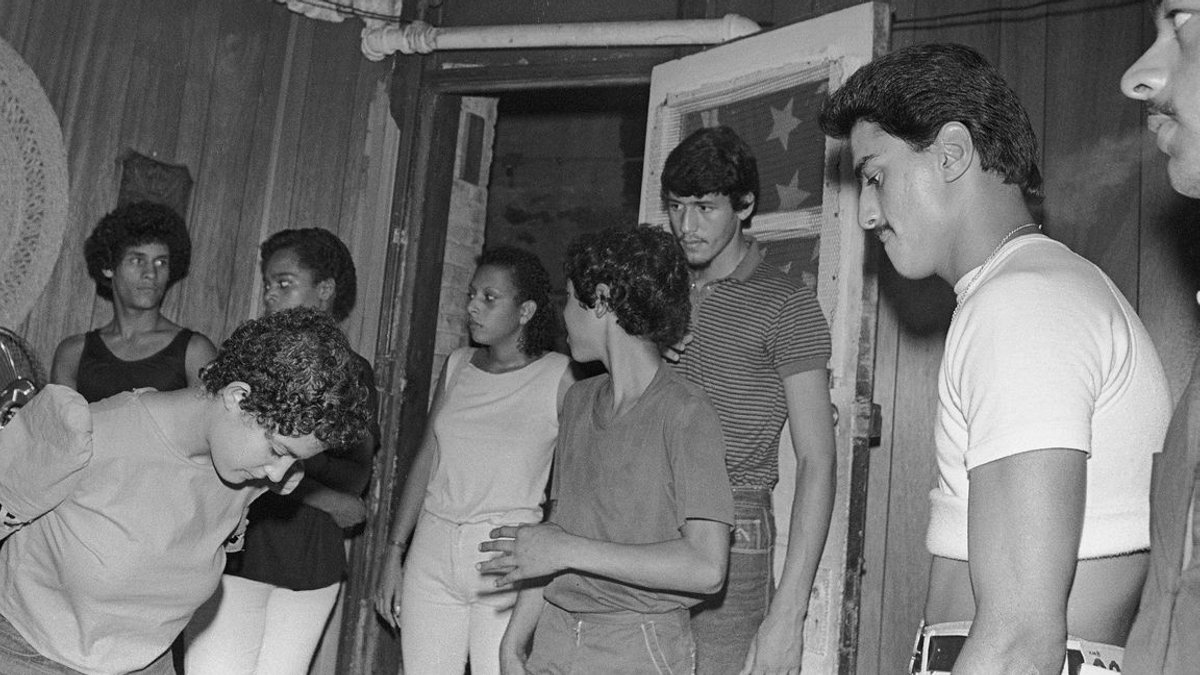
House parties, once a cornerstone of social life, are fading from modern culture. The living rooms and kitchens that once hosted these gatherings are now quieter, their walls no longer bearing the marks of dancing bodies or the hum of shared intimacy.
The spaces that shaped a generation
The architecture of a home shapes how people move, connect, and even flirt. Narrow staircases force bodies close, while wider ones invite conversation. Kitchens become accidental stages for domesticity, where a stranger washing a cup might spark a fantasy of shared mornings. These details define the experience.
Related: MacBryde and Colquhoun’s 1940s Salon Sparked Brief Brilliance
During the 1970s and ’80s, immigrant communities in cities like London and New York turned living rooms into sanctuaries. Southampton’s shebeens and Harlem’s rent parties offered refuge from racist club policies and economic hardship. A small entry fee could help a family avoid eviction, while the music—Janet Kay, Dennis Brown, Asha Bhosle—filled the air with something like freedom. Mabel Dwight’s 1929 painting Harlem Rent Party captures this energy: bodies undulating, a sign reading “Home sweet home” a quiet defiance.
Such gatherings were also acts of transformation. A rented magnolia wall might end the night smeared with indigo dye, a belt buckle’s scrape lingering like a ghost. Furniture took on new roles—a radiogram for records, a washing machine as a perch for tired dancers. The mess afterward became part of the ritual: broken things fixed together, noise complaints negotiated, the shared labor of cleanup binding strangers into something like family.
Related: Luxurious Italian Modern Space Opens in Flagship
The intimacy of domestic spaces
Now, that stage is harder to access. Rising rents, restrictive leases, and the isolation of digital life have made hosting difficult for many. Even the physical spaces work against it—new-build flats with thin walls, flatshares with strangers, landlords who ban gatherings outright. The outcome is a generation that has never experienced the alchemy of a house party, where a stranger’s hand on a railing might lead to a kiss, or a shared glance across a crowded room could change everything.
The decline of house parties may reflect a broader shift. In an era where physical touch is rationed and privacy is a luxury, filling a home with strangers—letting them rearrange the furniture, leave marks on the walls, and linger until dawn—feels almost radical. The desire hasn’t vanished. It’s waiting for the right space, the right music, and the right people to revive it.


