
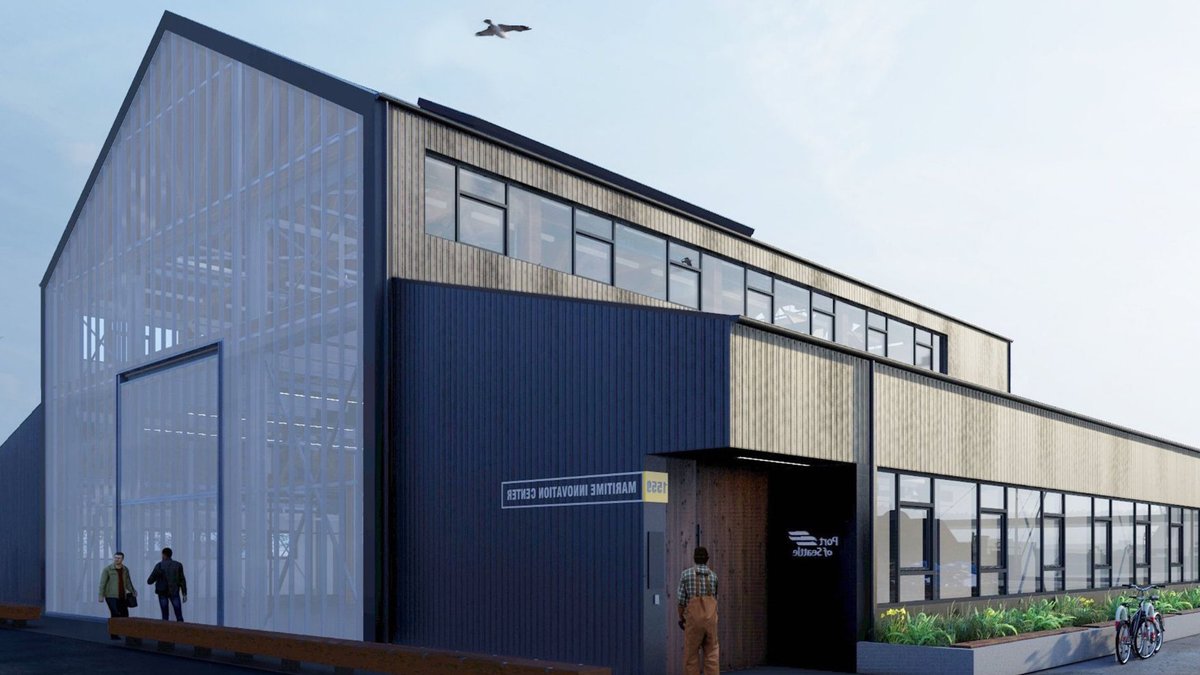
The Miller Hull Partnership’s design for the Maritime Innovation Center has been named a finalist in the 8th annual GRAY Awards, specifically within the On the Boards breakout category. The project aims to transform a historic structure at Fishermen’s Terminal into a hub for the region’s growing Blue Tech economy.
Fishermen’s Terminal serves as the home port for Seattle’s commercial fishing fleet, and the Port of Seattle plans to use this site to grow local maritime industrial and technology sectors. The new Maritime Innovation District will consist of the Maritime Innovation Center in the former Seattle Ship Supply Building, designed for small startups, and the Gateway Maritime Technology Incubator, which offers flexible workspaces for established enterprises.
An adaptive reuse of the Terminal’s oldest remaining structure, the center will support and drive innovation through collaborative research and development facilities. The design team applied experience with the Living Building Challenge to guide the Port through the challenges of meeting ambitious sustainability goals.
Related: El Dorado applies trauma-informed design to Oregon center
Most of the building and its century-old heavy timber structure will be salvaged and reused, honoring the cultural and economic significance of Seattle’s maritime history. This approach maintains the form and mass of the more than 100-year-old building along the working waterfront while enhancing the iconic pitched roof with locally sourced and industrially appropriate materials.
Building a Regenerative Model
The project is seeking full Living Building Challenge Certification, aiming to become a model for other ports. Sustainability will be on display with the addition of rainwater cisterns and an on-site photovoltaic array.
By treating all gray and black water onsite, the rehabilitation of the building helps keep the very waters that fishers rely on clean. The Port has also enlisted site-specific public art including works by Tulalip native artist Ty Juvinel and muralist Shogo Ota.
Related: The Hidden Inequality: How Singapore’s Waterproofing Crisis Reveals Deeper Social Divides
Anchor tenant Washington Maritime Blue will occupy the center, an organization committed to developing sustainable maritime business and technology. The facility will host events to promote Blue Tech start-ups, with startups eventually expanding to nearby sites in the maritime cluster along Salmon Bay.
For a city that prides itself on its history of working waterfronts, the center represents a significant shift in how industrial areas can function. It demonstrates that respecting the past does not require sacrificing the future, particularly when sustainability is treated as a fundamental infrastructure requirement rather than an optional upgrade.


