
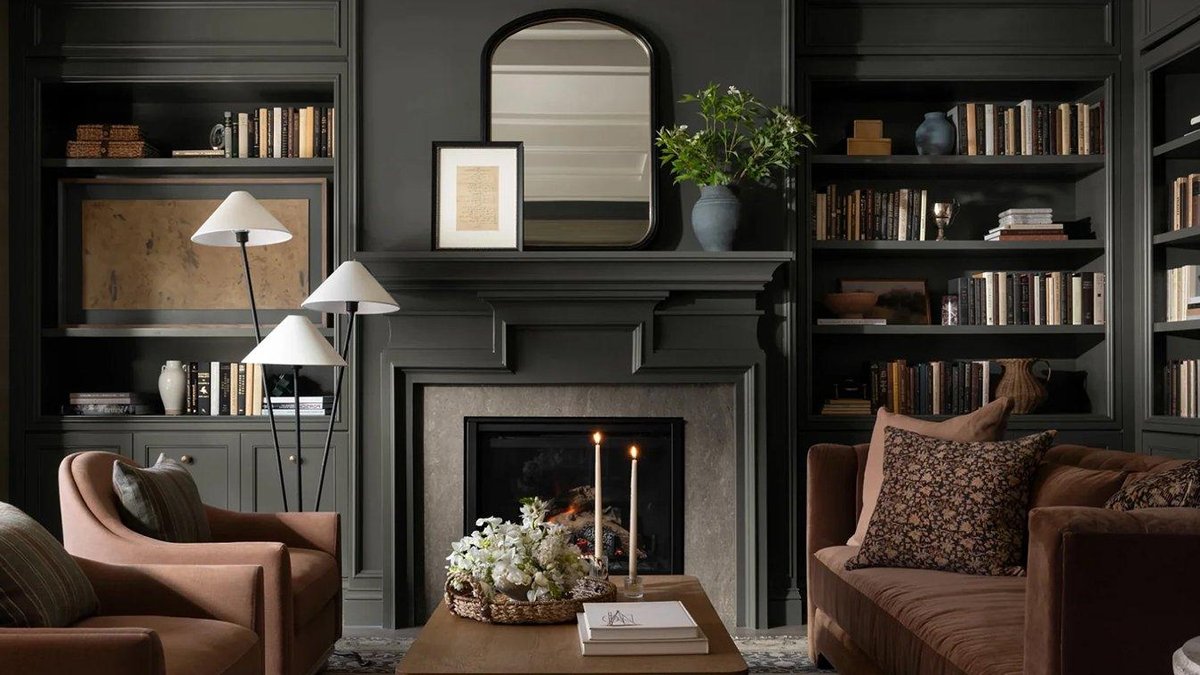
The resurgence of dark interiors presents a bold alternative to the bright, airy designs that have led home aesthetics for years. Shades like navy, charcoal, and forest green do more than create visual impact—they support warmth, intimacy, and a sense of retreat that lighter schemes often fail to deliver. These hues transform spaces into havens where sophistication and comfort merge seamlessly, feeling both refined and lived-in.
How to Layer Dark Interiors
Dark tones excel when applied with deliberate layering. A wall painted in deep navy can appear overwhelming if left stark, but introducing textured velvet upholstery, warm wood finishes, and metallic accents shifts the mood from heavy to inviting. The principle is balance: darker shades on walls or large furniture anchor the room, while lighter textures—such as a cream throw or brass hardware, prevent it from feeling confined. Even in compact spaces, dark colors amplify coziness by creating an enveloping atmosphere rather than a cramped one.
A flat expanse of dark paint differs entirely from a thoughtfully moody interior. The true transformation occurs in the details. Pairing a charcoal-gray sofa with a single gold-framed mirror or framing a forest-green accent wall with floating shelves displaying mismatched ceramics introduces depth without visual overload. The aim is not uniformity but a deliberate rhythm, where each element, a textured rug, a sculptural vase, or a bold artwork, contributes meaningfully to the whole.
The appeal of dark interiors lies in their psychological effect: they encourage slowing down. In an era of relentless stimulation, rooms draped in deep tones offer a deliberate pause. However, the outcome depends on execution. Poor lighting in a dark room can create a cold, unwelcoming atmosphere, whereas the right illumination transforms it into a warm, immersive space.
Lighting Strategies for Moody Rooms
Lighting serves as the foundation of moody interiors. Warm-toned bulbs, ranging between 2700K and 3000K, emit a golden hue that softens shadows, while layered lighting, ambient, task, and accent, adds dimensionality. A single brass pendant light over a dining table or clustered sconces flanking a bed establishes focal points that guide the eye. For optimal impact, combine fixed lighting with adjustable options, such as dimmable floor lamps or LED strips behind furniture. Natural light also plays a role: sheer curtains or strategically placed mirrors distribute light without diminishing the depth of dark walls.
Accessories define the character of a space. A dark green velvet armchair may stand out, but pairing it with a chunky knit throw and a reclaimed wood side table introduces warmth. Artwork should complement rather than compete, oversized black-and-white prints or abstract pieces in muted tones add intrigue without clashing. The guiding principle is simplicity: moody interiors thrive on purposeful restraint, where every object serves a function, whether practical or emotional.
Dark colors can actually enhance the perceived atmosphere of small spaces. By using darker shades on walls and complementing them, you can create a cocoon-like effect that draws people in.
Easy Ways to Test Dark Décor
For those unsure about committing to dark walls, gradual changes work best. Start with an accent wall or dark furniture that can be easily replaced later. Rugs, curtains, or bedding in deep tones allow testing the aesthetic before full implementation. If a room feels too heavy, metallic finishes, gold, brass, or copper, introduce reflected light and elegance without compromising the moody tone.
The most effective dark interiors feel authentic, not artificial. They are spaces where each object carries weight, and colors extend beyond paint to set a specific mood. Whether it’s a deep blue reading nook with a single lamp or a black-and-white dining room anchored by a vintage chandelier, the best designs blend drama with comfort. The result transcends decoration, it becomes a sanctuary.


